Daniel Upton
The Thing on the DoorstepDaniel Upton is Edward Pickman Derby’s lifelong friend and the narrator of the account that culminates in Upton shooting Edward at the Arkham Sanitarium. He accepts responsibility for the killing but rejects the name of murderer: in his telling, Edward’s body had become the vessel of a horror that had to be stopped. His conviction is inseparable from uncertainty about his own sanity and safety.
Identity and Friendship
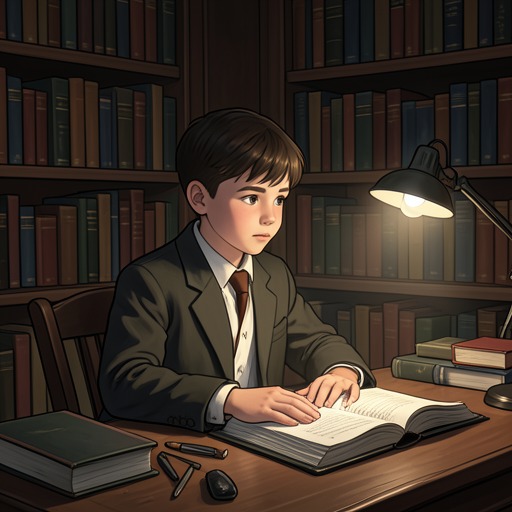
Upton says he had known Edward all his life. Eight years older, he was sixteen when Edward was eight, and the younger boy’s precocious scholarship and writing made them kindred spirits despite the difference in age. Upton’s testimony thus comes from a relationship of long standing, not from a distant observer’s account: Edward is the friend whose fate gives Upton’s later decision its personal as well as catastrophic stakes.
The Killing and Its Justification
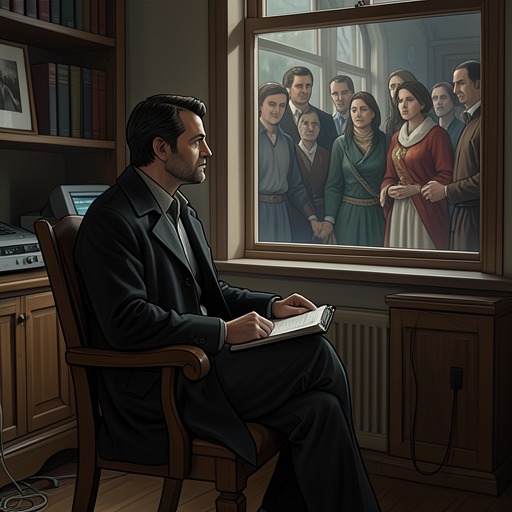
At the outset, Upton admits that he shot Edward in his cell at the Arkham Sanitarium, while anticipating that readers would take this as proof of madness. He argues instead that he avenged Edward and removed a danger whose continued existence, as he understood it, might threaten others. This distinction is central to his account: the physical act is undisputed, but Upton insists that the person—or presence—he shot was no longer Edward.
The following afternoon, after recovering enough from a period of prostration to walk and speak coherently, Upton went to the sanitarium and shot Edward dead. He presents the decision as one made for Edward’s sake and for the world’s, not as an act of personal escape from his friend. His explanation depends on accepting that Edward’s apparent identity and the nature of the being occupying his body had come apart.
Fear and Uncertainty
Upton does not describe himself as wholly certain of his interpretation. He admits that he once regarded the stories he acted upon as madness and continues to ask whether he was misled or is himself mad. He dismisses the police’s explanation of a grotesque prank or warning, but his confidence in that rejection does not settle the question for him; his account holds conviction and doubt together.
After the shooting, Upton fears that the forces he associates with Edward’s fate can survive the death of a physical body. He urges that the body be cremated and worries that, until this happens, he cannot know whether the danger has ended. His final fear turns inward: he believes he may be the next person threatened with a change of souls and insists that he will not surrender his own body. The ending therefore leaves his safety unresolved even as he presents the shooting as a necessary defense.
Narrative Role
Upton is both the actor responsible for the story’s decisive killing and the witness asking readers to accept its supernatural explanation. His lifelong friendship with Edward gives his account emotional authority, while his admission of violence and repeated doubts complicate that authority. The result is a testimony in which the same act can be read as murder or as rescue, and in which Upton’s attempt to end the horror cannot assure him that it has ended.